Architecture of Human Conviction
The sheer act of holding a human will shapes outcomes. In spite of situation, evidence, or reason. 31 research threads, one thesis, and a daily practice to operationalize it.
Hope Maxxing: The Practice of Visualization
“Your worst sin is that you have destroyed and betrayed yourself for nothing.” — Dostoevsky
It is easy to be a doomer. It is also, measurably, lethal. A Yale study tracked thousands of people over decades and found that those with negative self-perceptions of aging died 7.5 years earlier than those with positive ones. That gap is larger than the observed benefit of quitting smoking or regular exercise. A rigorous statistician will tell you this is correlation, not causation. Healthier people probably feel better about aging because they’re healthier. You cannot run a randomized controlled trial on belief. That is the paradox at the center of this entire essay: the most important things about conviction cannot be proven in the way we demand proof. But the association is enormous, it replicates, and the people who dismiss it are not living longer.
There is a terrible phrase floating around the internet called “retard maxxing.” I don’t love the name. But the kernel is real. The idea is simple: believe harder than the evidence supports, and the evidence starts to move. We are going to call this Hope Maxxing.
In Aboriginal Australian tradition, a shaman can point a bone at you and you will die. Not metaphorically. Walter Cannon documented the physiology in 1942: the body floods with adrenaline, the heart fails, you die of belief. Hahn and Kleinman argued in 1983 that a terminal medical diagnosis operates through the same mechanism. The white coat is the ceremonial garment. The imaging results are the divination tools. The authority gradient is identical. A doctor who says “you have six months” and a shaman who points a bone are pulling the same biological lever.
Now flip it.
When researchers administered morphine through a hidden IV, with the patient unaware they were receiving anything, the drug lost most of its power. When they administered saline openly, with full clinical theater, patients reported significant relief. The patient’s knowledge that they’re receiving treatment accounts for a massive portion of the drug’s observed clinical effect. Researchers gave IBS patients sugar pills, told them explicitly these are placebos with no active ingredient, and 59% still reported adequate relief. In a 2004 fMRI study, Tor Wager showed that placebo expectation didn’t just change the report of pain. It changed the underlying neural processing. The brain literally hurt less.
This is not woo. This is not The Secret. This is peer-reviewed, replicated, published-in-Science biology. And it goes deeper:
- The brain is a prediction machine. Karl Friston’s free energy principle: beliefs function as statistical priors that shape perception before conscious experience begins. Your brain is not recording reality. It is generating a model and checking it against incoming data.
- The servomechanism. Maxwell Maltz, a plastic surgeon in the 1950s, found that patients who had facial surgery often still felt ugly. Their faces changed. Their self-image didn’t. He called it Psycho-Cybernetics: the target in your head steers everything, and it does not update automatically.
- Mental training builds real strength. At the Cleveland Clinic, subjects spent 12 weeks imagining muscle contractions. No physical movement. Result: 35% increase in finger abduction strength, entirely neural in origin.
- Process beats outcome. Imagining the steps consistently outperforms imagining the result. Don’t picture the trophy. Picture the reps.
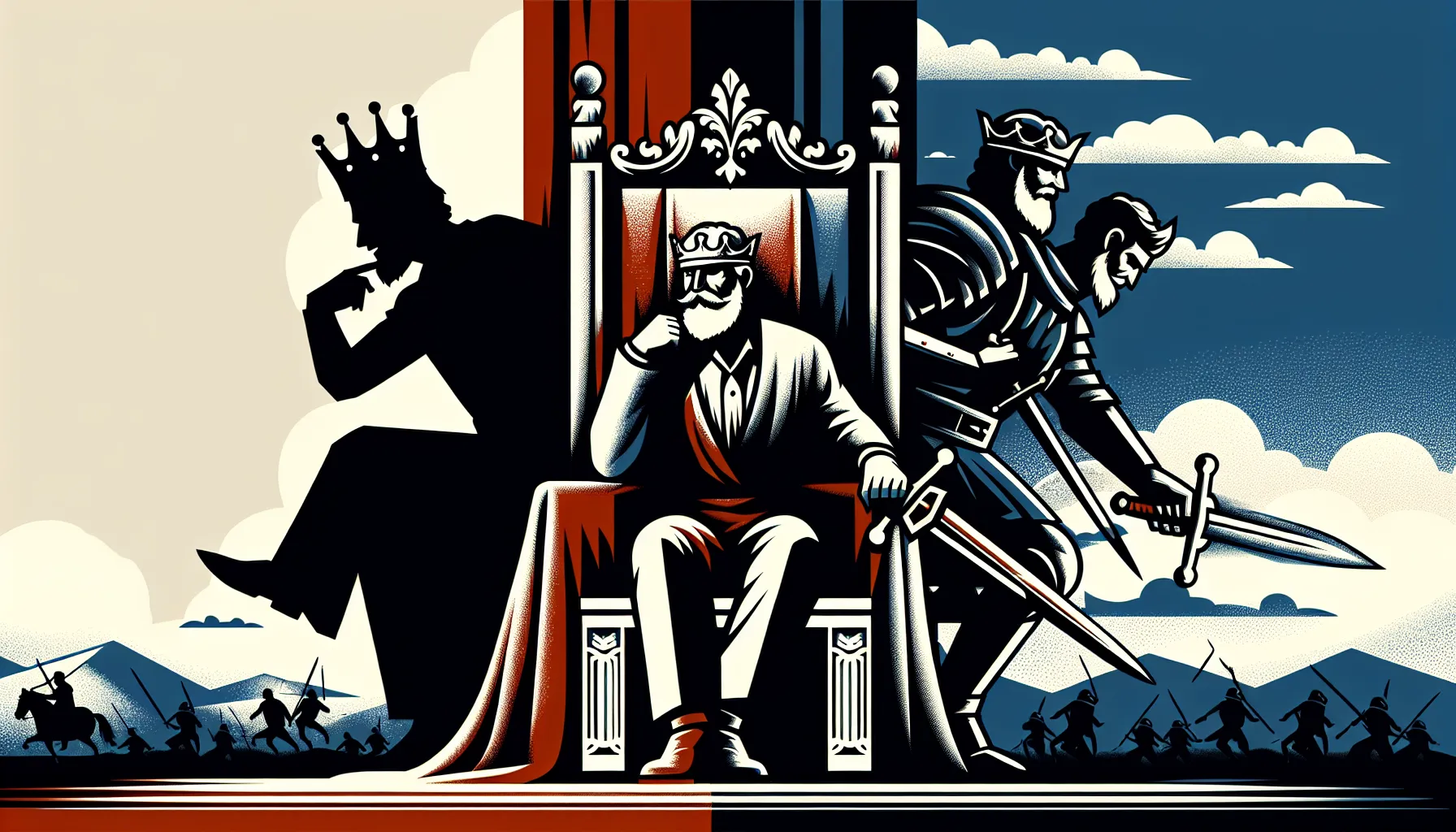
This is where Theoden and Wormtongue come in. You know the scene. The king sits on his throne, gray and hollowed, whispering poison into his own ear through a proxy. That voice is always available. It is the default. Seligman and Maier spent 50 years studying learned helplessness before realizing in 2016 that they had the causal direction backwards: passivity is the brain’s default response. Controllability must be actively learned. The prefrontal cortex has to detect that your actions matter, and then override the default shutdown. If you are not actively training that circuit, Wormtongue wins.
Daily visualization is holding your sword. It is the practice of telling the prediction machine what to predict. Not once. Every day. Because the machine drifts back toward whatever signal is loudest, and the loudest signal in modern life is fear.
Being a doomer is a choice. Pick a different pill.
Improving Acute Performance
So how do you put this to work? Not in theory. Right now. In the next rep, the next meeting, the next moment where it counts.
Timothy Gallwey figured this out on a tennis court in 1974. His formula: performance equals potential minus interference. Self 1 is the analytical, judging mind. Self 2 is the body’s intelligence. Self 1 is the one telling you to keep your elbow up while you’re mid-swing. Self 2 is the one that actually knows how to hit the ball. The job is to get Self 1 to shut up.
This is not metaphor. Rich Masters proved it in 1992: motor skills learned implicitly, without explicit verbal instruction, are significantly more resistant to choking under pressure. Beilock et al. found that expert golfers putted worse when given extra time to think and better under time pressure. Novices showed the opposite pattern. Conscious attention actively degrades expert performance. The more you think about what you’re doing, the worse you do it.
But the answer is not “stop thinking.” It is “think at the right altitude.” BJJ makes this concrete. “Get to the back” is strategic. Your conscious mind should be here. “Shift my left hand to the collar while rotating my hips 45 degrees” is tactical. Your body handles this if you have drilled it. Think at the level of WHAT. Let your body handle HOW. That is what Danaher’s coaching does: simple objectives, drilled execution. The plan is strategic. The movement is automatic.
And your level matters. White belts need to think more because they do not have patterns yet. Black belts need to think less because their body knows. Purple belt is the hardest place to be: enough knowledge to overthink, not enough automaticity to trust. The discipline shifts as you advance. Early on, you are building the map. Later, you are learning to put it down.
The Japanese martial arts tradition calls this mushin, no-mind. Neuroscience calls it transient hypofrontality: the prefrontal cortex quiets down, and procedural memory runs uninterrupted. It is the same state. Steve Kerr calls The Inner Game of Tennis his Bible in the NBA. The samurai arrived at the same destination through a different door: if you have already accepted death, fear cannot interrupt your technique.
Here is a concrete thing you can do tomorrow. When you are lifting, do not just move the weight. Visualize the specific muscle contracting. See the fibers firing. Feel the contraction before you initiate it. You already saw the evidence in Section 1: mental training alone builds measurable strength. Now apply it. Prime the pathway before you touch the bar.
And here is a less obvious one: grunt. A 2018 study found that vocalization during exertion produces a 9-10% increase in force output. It also makes your opponent 45 milliseconds slower to respond, with a 3% increase in decision errors. The kiai in karate is not theater. It is a performance enhancer with a measurable effect size.
Self-efficacy, the belief that you can do a specific thing, correlates at .38 with work-related performance across a meta-analysis of over 21,000 subjects. That makes it the single strongest psychosocial predictor in the literature. Johnson and Fowler formalized this in Nature in 2011: overconfidence is an evolutionarily stable strategy whenever the potential upside is large relative to the cost of attempting. The math says: when in doubt, believe you can.
But belief is not just a daytime sport. In 2021, Konkoly et al. posed math problems to sleeping subjects across four independent labs during REM. The dreamers answered correctly using pre-arranged eye-movement signals. The conscious mind is not fully offline during sleep. In a separate line of research, Wamsley found that subjects who dreamed about a navigation task improved approximately 10x more on retest than those who didn’t. What you carry into sleep shapes what your brain processes overnight. Intention-setting before bed is not journaling fluff. It is directing a consolidation engine.
The Stockdale Paradox is the boundary condition here. Admiral Stockdale survived seven years in the Hanoi Hilton. When asked who didn’t make it, he said: the optimists. The ones who said “we’ll be out by Christmas.” When Christmas passed, they died of broken hearts. Stockdale’s version of belief was different. He never doubted that he would get out. He also never set a deadline. Conviction without a clock. That is the version that survives.
Wim Hof’s trained subjects demonstrated a 51-57% reduction in proinflammatory cytokines after receiving an endotoxin injection, using breathing techniques and focused intention. Published in PNAS, 2014. The breathing is not just mental. Deliberate hyperventilation produces measurable alkalosis and sympathetic nervous system activation. The intention directs it. The physiology executes it. That is the point: conscious decision produces concrete biological change. The bridge between voluntary and autonomic is real, and breathing is how you walk across it.

Finding Your Purpose
Everything in the previous two sections is a weapon without a target. All thrust, no vector. I know because I ran that way for years.
The Ohsaki Cohort Study followed 43,391 Japanese adults for seven years. Those who reported no sense of ikigai, no reason for being, had a 1.5x higher all-cause mortality rate and 1.6x higher cardiovascular mortality. Not having a purpose doesn’t just make life feel empty. It makes your heart stop sooner.
Viktor Frankl watched this happen in real time. In Auschwitz, prisoners who believed they would be liberated by Christmas 1944 died in disproportionate numbers between Christmas and New Year’s. Not from starvation. Not from violence. From the collapse of a target. The prediction machine had nothing left to steer toward, and the body followed.
The job is not to have a job. The job is to find something worth winning at.
For most people, I encourage something that sounds dramatic but is actually simple: existential soul searching. Sit with the question of what you believe. Not what you do for a living. What you believe is worth existing. It is not complicated. But it is work that most people avoid because the default, the Wormtongue state, is easier.
Here is the thing about the self-fulfilling prophecy: it is not just a psychology concept. It is the operating system. Diamond and Dybvig won the Nobel Prize in 2022 for formalizing this in economics: bank runs happen because people believe banks will fail, act on that belief, and cause the failure. “If men define situations as real, they are real in their consequences.” That is the Thomas Theorem from 1928, and it has not been overturned because it cannot be.
Every major religious tradition has a version of this. Does the belief produce a life worth living?
I believe God intervenes. I have seen it in my own life, and I am not interested in pretending otherwise to sound measured. If that is not your framework, the rest of the evidence still stands. This essay is not an argument for or against prayer. It is an observation that directed conviction, whether you call it prayer, meditation, or visualization, produces measurable outcomes. People who attend religious services regularly live measurably longer. The mechanism is real. Whether it is purely psychological or something more is not a question this essay can answer. But the metaphysical impact is there, in the data, regardless of what you believe is causing it.
Unless you have something you believe in, you will not be able to corral all your hope maxxing toward any real target. The visualization practice from Section 1 becomes an engine. The acute performance techniques from Section 2 become fuel. But without coordinates, you are burning fuel in a parked car.
Find the thing. Program the target. The servomechanism will steer.
Building Hopecore Cult
Cults, at some level, are fun. Why else would people join them?
Durkheim called it collective effervescence: the feeling that arises when people move, chant, breathe, or believe in synchrony. Neuroscience has since confirmed that brain waves literally synchronize during coordinated group activity. The intensity of the ritual, not the content of the belief, determines how real and urgent it feels. This is why military drill works. Why rave culture works. Why church works. The mechanism is agnostic to the content.
When COVID eliminated stadium crowds in the German Bundesliga, the home win rate dropped. Not because the venue changed. Because the crowd’s belief disappeared. That is a quasi-experimental proof that collective conviction is a measurable performance variable.
So the question is not whether to build a cult. The question is whether to build a good one.
The CIA spent 20 years and over $10 million trying to answer a different question: can you manufacture conviction? MK Ultra ran 149 subprojects across 80+ institutions. LSD, sensory deprivation, electroshock, hypnosis. By 1960, program director Sidney Gottlieb admitted the whole thing was a wash. You can destroy identity. Ewen Cameron proved that at McGill, at enormous human cost. But you cannot rebuild it to specification. The Jason Bourne version of mind control is fiction. The real conclusion is more interesting: belief cannot be installed from the outside. It can only be cultivated from within.
This is why propaganda is fragile at the edges. In Asch’s conformity experiments, 37% of subjects gave obviously wrong answers to match the group. But introduce a single dissenter, one person who says the true thing, and conformity collapses to 5-10%. Manufactured unanimity is the essential mechanism of mass belief engineering. And it is disproportionately easy to break. One honest voice is enough.
Yurchak studied the late Soviet Union and identified the terminal state: hypernormalization. A system where no one believes, everyone performs, and the whole thing looks solid right up until the moment it isn’t. That is the failure mode. When your cult runs on performance instead of conviction, you are building Rome in its final century. Ibn Khaldun mapped this in 1377: strong group solidarity (asabiyyah) creates success. Success creates comfort. Comfort dissolves the solidarity that created it. The cycle is self-consuming by design.
So don’t build a bad cult. Don’t build a performative one. Build the kind where people actually believe, because they can see that you actually believe.
Conviction transmits through behavior, not argument. Shackleton didn’t give speeches about survival. He served hot drinks and kept the routine. The research on historical figures who accomplished impossible things converges on a single pattern: the leader’s belief was visible in what they did, not what they said. People followed because the conviction was legible in the action.
In the age of AI, this matters more than ever. AI produces learned helplessness in the passive and unprecedented leverage for the directed. The same technology. Opposite outcomes. The variable is conviction.
Build something worth believing in. Believe in it visibly. Bring people along. Not through manipulation, not through manufactured consensus, not through performance. Through the oldest technology humans have: genuine conviction, held openly, transmitted through action.
That is the hopecore cult. Make the world better. Believe you can. Mean it.

The Daily Stack
None of this matters if you don’t do it.
| Trigger | The Rep |
|---|---|
| Every morning (2 min) | Two minutes. That is all. Sit. Close your eyes. Walk through your identity: what do you believe? What are you building? What kind of father, builder, athlete, person are you today? Then visualize the hardest thing you’ll face. The steps, not the outcome. Feel it in your body. Open your eyes. Wormtongue is gone. |
| Before you lift | Pick the muscle. See it contract before you touch the weight. Mind fires before body does. You have permission to yell. 9% more force is free. Silence is leaving reps on the table. |
| Before you roll | Visualize your A-game. Not the whole match. Your first move off the slap-bump. The sweep from guard. The submission chain. Feel the grips before you touch the gi. Process, not outcome. |
| During the roll | Three questions, in order. “What’s happening?” Name the position. “Make it tolerable.” Buy time if you’re in a bad spot. “What’s the best next step?” Pick one action. Commit. Deliberate, not desperate. Move toward the problem, not away from it. |
| After you roll | Mental replay. Pick one bad position. Re-run it with the right response. Not the whole roll. One moment. Visualize the correction, not the mistake. The consolidation engine runs overnight. Feed it the right footage. |
| When you’re stressed | Decide not to be. Box breathe: 4 in, 4 hold, 4 out, 4 hold. Tell yourself: this is not stressful. You are a prediction machine. Predict calm. |
| Before a high-stakes moment | What’s the problem? Fix the problem. Have more than zero thoughts but not enough to sabotage yourself. BJJ: 1) take them down, 2) pass, 3) pin, 4) submit. Meeting: 1) what do they need to hear, 2) say it, 3) shut up. Pitch: 1) name the pain, 2) show the fix. Short steps. Coachable objectives. Then stop thinking. Execute. |
| When you are tempted | Your meat suit is tempting you. You are more than that. The urgency feels like need. It is not need. It is 200,000-year-old hardware. You are the thing that observes the craving, not the craving. Let the wave pass. |
| Before sleep | Do your examen. Where did you hold the sword today? Where did Wormtongue get back on the throne? No judgment. Just the audit. Then give your brain one question to work on overnight. |
| Every week (the chopping block) | What is getting your best energy? What is getting energy it doesn’t deserve? Cut it. The servomechanism can’t steer toward seven targets. Pick one. Recalibrate. Reload. And tell one person. Not a group. One human who will tell you when Wormtongue is back on the throne and you can’t see it. Discipline works alone for a while. Then it doesn’t. |
The worst sin is betraying yourself for nothing. This is how you stop.